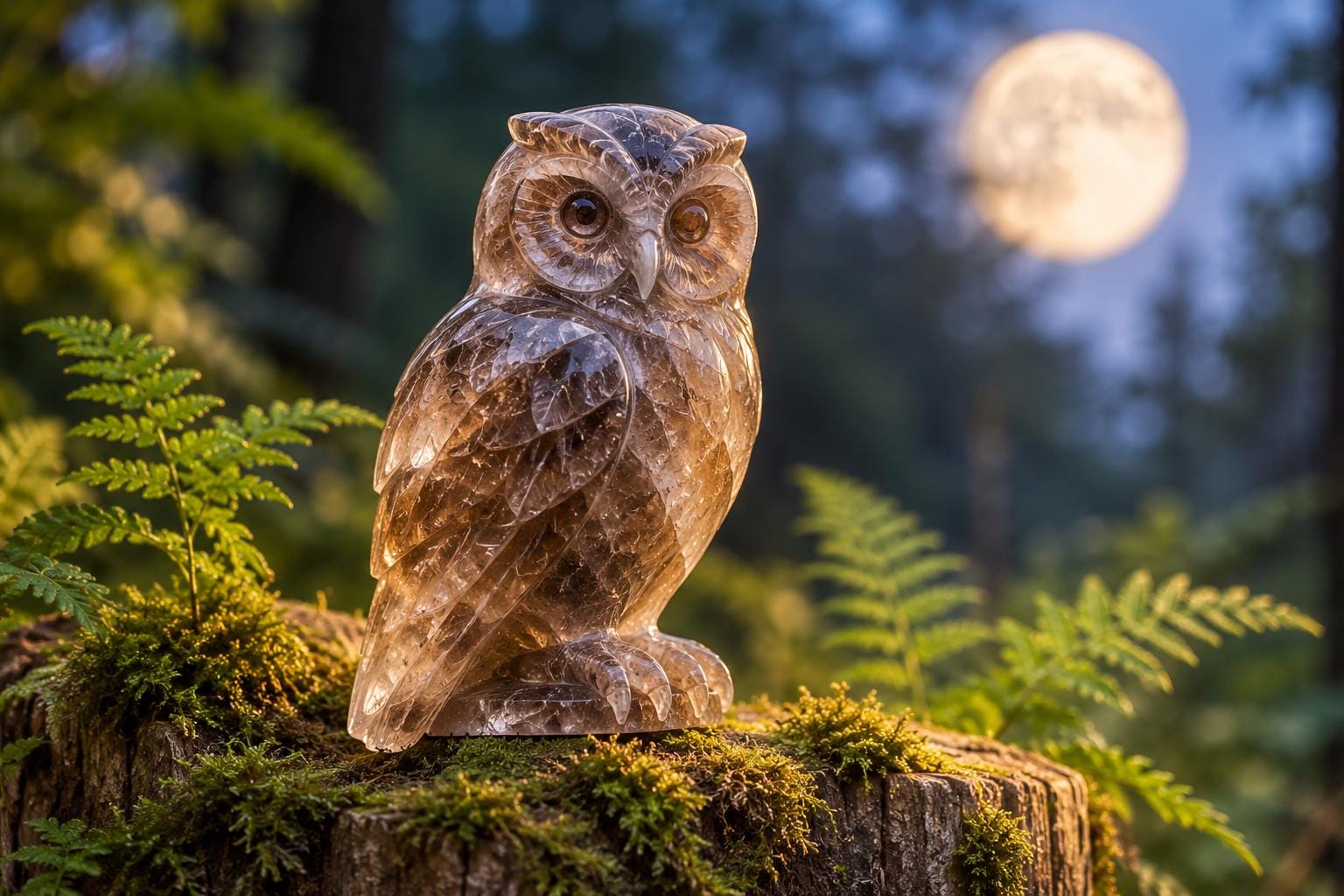
There is something about an owl that makes you pause. Those enormous eyes, the rounded face, the watchful expression, and the ability to appear almost silently out of the darkness give these birds an air of mystery. They look as though they know something the rest of us haven't figured out yet!
Owls have inspired stories, artwork, legends, and decorative carvings for centuries. But their appeal isn't based on folklore alone. Their unusual anatomy and remarkable hunting abilities make them some of the most fascinating birds in the natural world.
Nature's nighttime specialists
Owls belong to the bird order Strigiformes, and many species are adapted for hunting in low light. Although most are nocturnal or active around dusk and dawn, their schedules vary. Some species are active during daylight, too.
Their large, forward-facing eyes provide binocular vision, helping them judge distance when hunting. Unlike human eyes, however, owl eyes are relatively fixed in their sockets. Their flexible necks allow them to turn their heads through a much wider range than we can, helping them scan their surroundings.
Their hearing is equally impressive. Many owls have facial feathers arranged in a rounded disc that helps direct sound toward their ears. In some species, the ear openings are positioned asymmetrically, allowing the bird to pinpoint the direction and even the vertical position of faint sounds.
And then there is the flight! Specialized feather structures help reduce noise as owls fly, allowing many species to approach prey with remarkably little sound. Nature essentially equipped them with built-in stealth technology, long before anyone invented the word!
Why are owls associated with wisdom?
The connection between owls and wisdom is especially familiar in Western symbolism, with roots in ancient Greek mythology.
The owl was closely associated with Athena, the Greek goddess of wisdom, strategic thinking, and crafts. Her Roman counterpart, Minerva, was also associated with the bird. Owls appeared in ancient Greek art and on Athenian coins, helping establish the connection between the bird, knowledge, and the city of Athens.
Over time, this imagery became part of Western artistic tradition. Today, an owl perched beside a stack of books or wearing tiny spectacles is almost universally recognizable as a symbol of learning.
Interestingly, owl symbolism has not been the same everywhere or throughout history. Even within Greek civilization, attitudes toward owls changed over the centuries, ranging from unsettling or funerary associations to powerful symbols connected with wisdom and divinity. The owl's meaning depends on the culture, time period, and story being told.
The symbolism behind owl carvings
Today, owl carvings are often selected for their associations with several meaningful ideas. These interpretations vary by personal belief, cultural background, and modern spiritual tradition.
- Wisdom and knowledge: Inspired in part by the Athena connection, owls are popular symbols of education, thoughtful decision-making, and lifelong learning.
- Intuition and observation: An owl's ability to detect movement and sound in darkness makes it a natural symbol of awareness, attentiveness, and looking beyond what is immediately visible.
- Protection and watchfulness: The owl's alert expression and reputation as a capable nighttime hunter have inspired associations with guardianship and keeping watch.
- Mystery and transformation: With their connection to nighttime and the unseen world, owls can represent curiosity, discovery, and the courage to explore unfamiliar things.
These are symbolic and metaphysical interpretations, not scientifically established effects. Their meaning is personal, and different traditions may interpret the same image in different ways.
A closer look at owl varieties
Part of the owl's charm is the incredible variety found throughout the bird family. Barn owls have distinctive heart-shaped facial discs, while great horned owls are recognized by their prominent feather tufts. Snowy owls have pale plumage that blends beautifully into Arctic landscapes, and tiny elf owls prove that not every owl needs an imposing size to make an impression.
These differences also inspire the many styles of owl artwork and carvings. Some emphasize large expressive eyes, while others focus on feather patterns, ear tufts, or a compact perched silhouette. Even a simplified owl shape can capture that unmistakable watchful personality.
Choosing an owl carving
An owl carving brings together natural beauty and symbolic meaning in a form that feels equally at home in a nature-inspired collection, a cozy reading nook, or a display of favorite animal designs.
The stone itself adds another layer of character. Color, translucency, natural patterns, and mineral texture can make each carving feel distinct. Some collectors are drawn to the details of the carving, while others choose a piece because of the symbolism it represents.
Whether you connect with the owl as a symbol of wisdom, appreciate its remarkable place in nature, or simply love its woodland charm, it is easy to see why this bird continues to inspire artists and collectors.
At Craven Crystals, we enjoy exploring the stories behind the shapes as much as the fascinating materials used to create them. From familiar animal companions to mythical creatures and nature-inspired designs, every carving has a story waiting to be discovered. And sometimes, a little owl is the perfect reminder to stay curious, keep learning, and look a little closer!